Friday, 8 May 2015

FISA and WWF: Partners for Clean Water

With the increasing pressures on our environment and countless experts alerting us to impending crises, it is worth remembering that there is just one natural resource on which all life on our planet depends - but which most of us take for granted: H2O - Water.  But for the 1.1 billion people who currently have no access to safe, drinking water, and the 4 billion for whom WWF projects it will be a scarcity by 2050, this shortage is a matter to be taken very seriously.

For this reason, any single body of fresh, clean water is already sought after by many different groups, whether by flora, fauna, industry, agriculture, municipalities or, those who just like to row.

Rowing is a clean water sport, and so rowers have a number of very good reasons to be part of the "Clean water movement". On the one hand, our sport and its future depend on it; but on the other hand, we cannot be selfish in our approach to its use.  As a sports federation, FISA believes that we all have a responsibility to apply environmentally-sustainable practices in the use and management of water. But we must do more and we must encourage others to do the same.  

Fortunately, we have a great number of knowledgeable, experienced and enthusiastic people within our rowing family around the globe. And we know that sport is a very powerful means of communication to all age groups.  So FISA has decided not to just take part in the debate, but to take a leadership position.

In 2011 they commenced a Strategic Alliance with WWF International (World Wide Fund for Nature). WWF is the world’s largest and most respected independent nature conservation organisation, with more than 5 million supporters and a network active in more than 100 countries across all continents. Since its creation in 1961, it has maintained a constant record of success. Today, WWF runs about 1,300 projects around the world at any one time and employs more than 5,400 people worldwide. WWF’s mission is to stop the degradation of the planet’s natural environment and to build a future in which humans live in harmony with nature.

Significantly, WWF is working to protect freshwater ecosystems and improve water access, efficiency, and allocation for people and the environment, which is why their partnership is a perfect fit in promoting clean water, one of the main priorities of WWF.


Care for the environment. So, not only we will gain in quality of life we ​​and other living beings, but also take care of our sport, rowing!

by worldrowing.com

Thursday, 7 May 2015

Spanish traditional rowing Trainera, Manufacture in carbon fiber for infusion

Hello rowers!

Today I you bring a video of since a Trainera of carbon is made by diffusion, though it is in Spanish it seems to me to be very interesting, since that is a very new project of the Basque government to spread his sport the trainera rowing on that so often we have commented in our post.

I hope that you like, it!


Rowing Equipment

Then we'd like to leave you a list of all possible Equipment that can be used in rowing. Here goes:


Blade
The flattened, or spoon-shaped, part of an oar that touches the water during rowing.

Boot
A device that holds the bow of a boat before a race, then drops below the water on the starting signal.

Bow
The forward section of a boat.

Bowball

A rubber ball attached to the bow tip of a shell to protect against damage and injury in case of a collision.

Button
A collar around the shaft of the oar that keeps the oar from slipping through the oarlock and can be adjusted up and down the oar to increase or decrease leverage.

Cox Box

An electronic device used by the coxswain to amplify his or her voice and broadcast it through speakers located throughout the shell.

Double
A sculling boat for two rowers.

Eight
A sweep-oar boat with eight rowers and a coxswain.


Fin
A small, flat piece of wood or plastic attached perpendicularly to the bottom of the shell to help the shell stay on a true course; also known as a "skeg".

Four
A sweep-oar boat for four rowers, with or without a coxswain.


Gate
A bar across the oarlock to prevent the oar from popping out.

Gunwale
A horizontal strip of wood running the length of a shell, to which the ribs and other parts traditionally are attached.

Handle
The part of an oar held by an oarsman.

Keel
The body of the shell that runs from box to stern.

Loom
The part of an oar between the blade and the handle.

Oar
A lever used to propel and steer a boat through water, consisting of a long shaft of wood with a blade at one end.

Oarlock
A U-shaped device on a boat's gunwale where the oar rests and swings; also called a "rowlock".

Outrigger
A framework attached to the shell and used to support the oarlock; also called a "rigger".


Pin
The metal rod upon which the oarlock is mounted.


Rib
A U-shaped piece of fabricated wood, aluminium or carbon fibre that supports the hull by fitting inside the shell between the keel and the gunwale.


Rigger
A framework attached to the shell and used to support the oarlock; also called an "outrigger".

Rowlock
A device on a boat's gunwale where the oar rests and swings; also called an "oarlock".


Rudder
A device under the shell of a boat used to steer it.

Scull
One of two short oars worked from side to side over the stern of a boat as a means of propulsion.

Shell
A rowing boat.

Skeg
A small, flat piece of wood or plastic attached perpendicularly to the bottom of the shell to help the shell stay on a true course; also known as a "fin".

Sleeve
The plastic jacket on the shaft of the oar upon which is mounted a button, used to secure the blade to the oarlock.

Wednesday, 6 May 2015

Australian Rowing at the Olympic Games 1896-2004

"In the name of all competitors I promise that we will take part in these Olympic Games, respecting and abiding by the rules which govern them, in the true spirit and honour of our team."
—Olympic Oath taken by an athlete of the host country on behalf of all assembled Olympians.

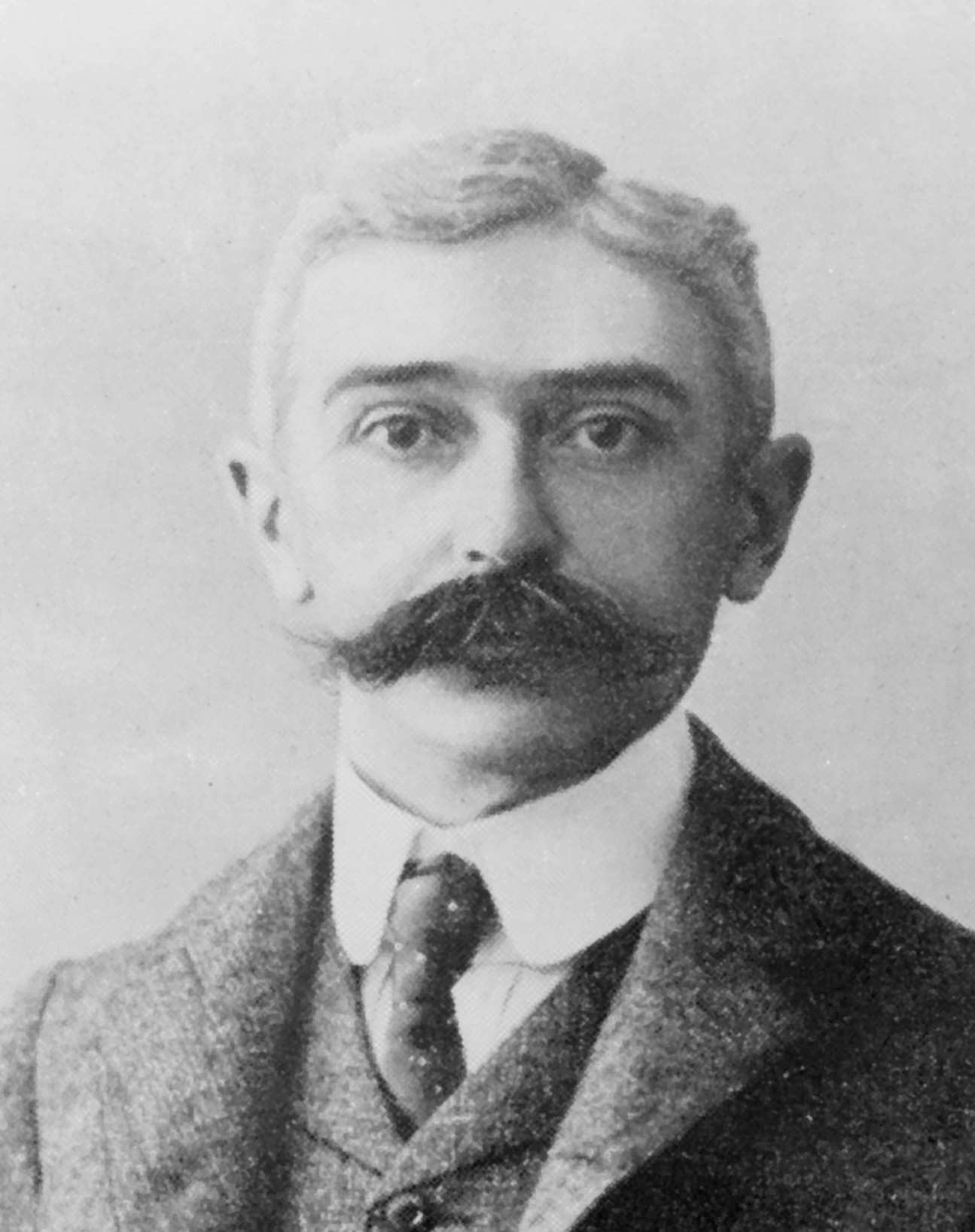
Baron Pierre de Coubertin.

French educationist Baron Pierre de Coubertin (1863-1937) is credited with the revival of the Modern Olympic Games. He thought that at least one reason for the flowering of Greece during it's "Golden Age" was sport and the ideals behind the Olympic Games.

He wanted to bring the youth of the world together in friendly competition where differences of status, religion, politics and race could be forgotten.

"The most important thing in the Olympic Games is not to win but to take part. Just as the most important thing in life is not the triumph but the struggle. The essential thing is not to have conquered but to have fought well."
—Baron Pierre de Coubertin, 1908. These words now appear on the scoreboard at every Opening Ceremony.

It is a clear that not all differences were to be ignored by him: he followed the Ancient Greek example of male only competition. Much to his chagrin, two women's swimming events were introduced in 1912 and, gradually ever since, women's events have continued to increase in number.

Between 1892 and 1894 he sought support for the modern Olympic Games from both within France and throughout the world. He convened the Congress Internationale Athletique de Paris (Paris International Athletic Congress) which decided on 16th June 1894 to "revive the Olympic Games on principles and in the conditions to the requirements of modern life". 

"The Olympic Games are not merely world championships, but the celebration of impassioned effort, of multiple ambitions and of every form of youth activities as each generation appears at the threshold of life."
—Baron Pierre de Coubertin

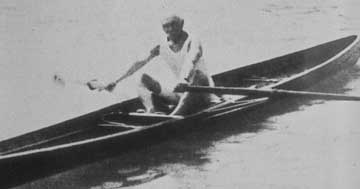
Baron de Coubertin was a keen sculler who rowed well into his later life. He was a member of Societe d'Encouragement du Sport Nautique, the oldest rowing club on the Marne River in France. 

He described rowing as the most beautiful of sports. The Baron thought so much of the sport that he sought to include sculling as one of the disciplines in the modern pentathlon in place of shooting. It was only the question of the additional administrative burden imposed on Olympic officials that dissuaded him.

Baron Pierre de Coubertin sculling on Lac Leman
Picture from 'The Story of World Rowing' — Christopher Dodd 1992

Speaking for ourselves, we see clearly as the Baron Pierre de Coubertin promoted our sport and all others by the Olympic Games. An example for everyone, who fought in favor of an egalitarian sport.

by Guerin-Foster in History of Australian Rowing.

Only for frikies...

Are you happened to you at some time? Only for frikies...


Last regatta of traditional mediterranean rowing

Hello rowers!

The last sunday 3 of may, was the last regatta of traditional mediterranean rowing, the SUMA LEAGUE finished for me and for my young team, remaining fifth of league.

It was very exciting since only 6 were qualifying for the championship of Spain. It was one very emotive day for this beginner club that never existed row in Altea at least had managed to compete in a Championship of Spain.

Now 3 weeks stay up to the national appointment in Murcia, we will keep you informed! I leave you the news of the newspaper of her region.


by Gente de la safor (http://gentedelasafor.com/not/27984/el-equipo-absoluto-femenino-del-rem-cia-gandia-se-clasifica-para-el-campeonato-de-espana/)

Tuesday, 5 May 2015

Welcome to the future!

For some time now some wonder ... The Spanish rowing has a future? Do our athletes are able to compete in the Olympic Games? The answer to these questions was rapid, forceful and concise; Yes.

But to build that future, certainly it requires changing the current Federal Management (today actually does not exist). Thus, a group of referees, executives, rowers and Technicians very diverse geographical and ideological origins, gradually gave shape to an idea that beating and commented on all National Regatta, in which it was crying and insistence a radical change in the course of our sport.

It does not try to change some people by others, to continue doing more or less the same. All we have to do is open a new path, a different path, seeking the best for our sport, from the debate and dialogue.

It is the duty of all to build it from both posts or executive positions, and from participation bodies. Surely you can also contribute.

The Spanish rowing requires us all.


Row to the Future: Why Rowing?

Through the George Pocock Rowing Foundation's youth development initiative, Row to the Future, Seattle is doing what no other city in the U.S. is doing. They are introducing students to indoor rowing through P.E. classes in Seattle Public Schools as part of Erg Ed, their school-based program. Erg Ed provides opportunities beyond the classroom through camps, field trips and indoor-rowing competitions. We also provide support for on-the-water rowing as part of Rainier Valley Rowing (RVR), which helps students overcome barriers to participation in traditional junior rowing programs such as cost, swimming ability and transportation.

Monday, 4 May 2015

What is adapted rowing?

Today we focus on the people who for various reasons khan not practice sport rowing but adapts. Rowing adapted is to form of the sport of rowing for people with disabilities, physical limitations or intellectuals, among which hearing impairment, paraplegia, quadriplegia, Down syndrome, blindness, visual impairment, multiple sclerosis, cerebral forked palsy is and spina.

Although it is not until the 2008 Summer Paralympics when competing for the first swindles Paralympic athletes in this discipline, since 2005 the tests for disabled part of the sports program at the International Championships of the International Rowing Federation (FISA) and for dwells twenty years it are been practiced in many clubs around the world.


There is the possibility of combining different disabilities within the same crew, allowing the integration of their components through sport.

Fundamental The techniques adapted rowing ploughs the same ace for odd number - disabled people rowing. Participants learn the elements of the race: strength, recovery, attack, management of trains, etc. Normal The learning curls is comparable to any novice rower and participants experience the same thrill in discovering our sport.

Adaptive Rowing unreturn in male and female athletes and, currently divided into four boat classes which ploughs(plough) part of the program of the World Championships FISA:
  • LTA4 +, they are disabled rowers but function in arms trunk and legs, and hard to slide the seat, can participate in this class are four types of disabilities and mixed vessels.
  • TA2x are athletes who have trunk movement but do not have the necessary strength in the lower extremities to slide the seat and propel the boat. Participants may be physically disabled and mixed cerebral palsy and boats.
  • AW1x, athletes without function or minimal trunk function, being female participation and physical disabilities may be paralyzed or brain.
  • AM1x, athletes without function or minimal trunk function, being male participation and may be physically disabled or cerebral palsy.
The tours are over a distance of 1000 meters for the four tests.

Dear colleagues and friends from the writers of this blog hats off to all athletes who practice their favorite sport adapted to their physical or mental limitations. Examples all !!

Rowing Biomechanics Newsletter - 4

Dear readers, we apologize for these days break in our blog, but we're back here!

Today, we continue with Biomechanichs Rowing publications Newsletter, and we leave with the last of this series of articles.

Hopefully you like it, will continue to give us the maximum for you.


Again, thank you very much for Rowing Biomechanichal Newsletter.