Showing posts with label rowing study. Show all posts

Thursday, 14 May 2015

Oars

Today, we will talk specifically of one of the elements of equipment of rowing. It seems obvious, but the oars from our point of view are some of the most important materials in this sport. Without them, we could not could propel, which would be impossible to practice this sport. Why, then, we offer a detailed description of these:
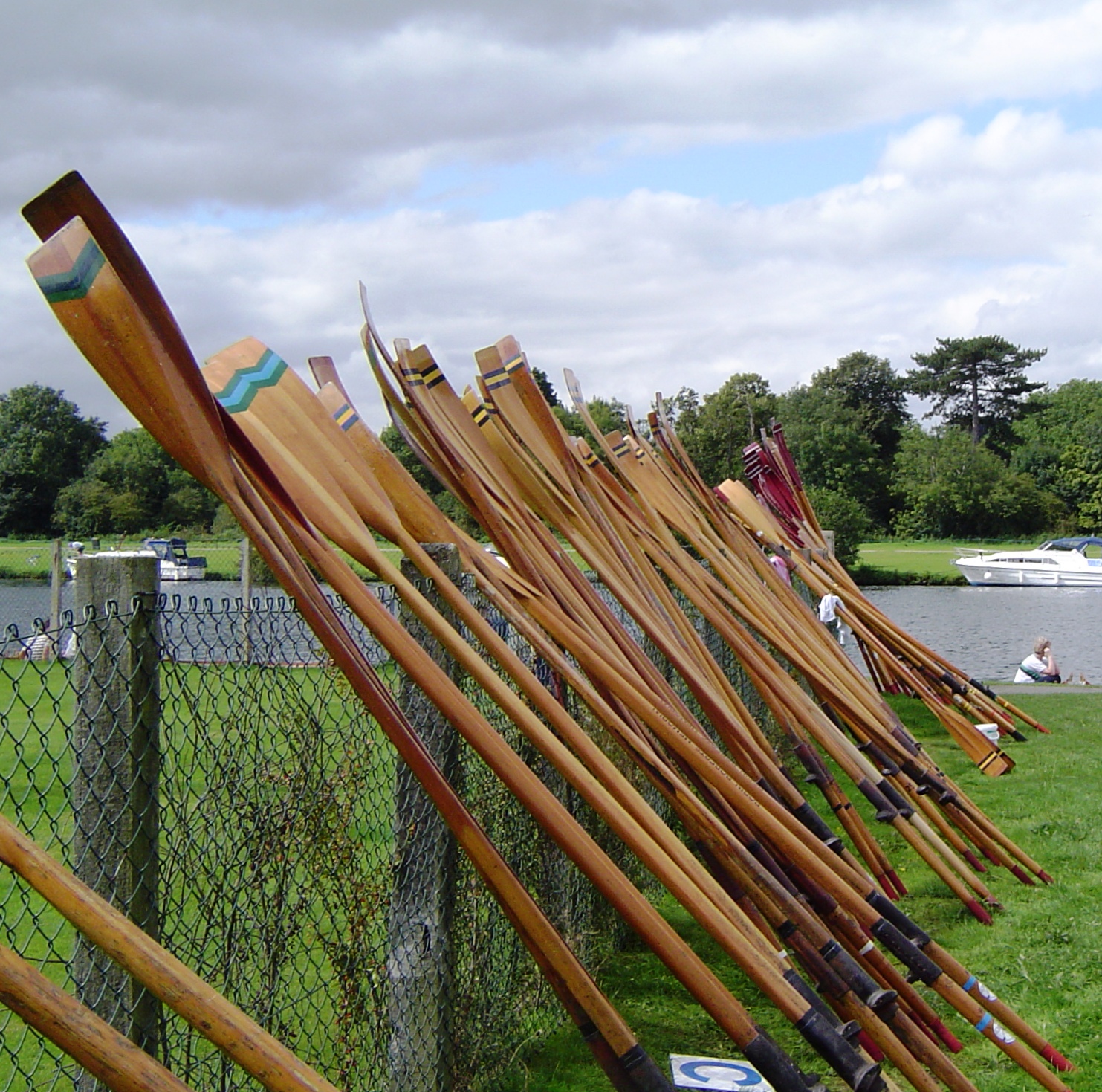


Oars are used to propel the boat. They are long (sculling: 250–300 cm; rowing 340–360 cm) poles with one flat end about 50 cm long and 25 cm wide, called the blade. Classic oars were made out of wood, but modern oars are made from more expensive and durable synthetic material, the most common being carbon fiber.


An oar is often referred to as a blade in the case of sweep oar rowing and as a scull in the case of sculling. A sculling oar is shorter and has a smaller blade area than the equivalent sweep oar. The combined blade area of a pair of sculls is however greater than that of a single sweep oar, so the oarsman when sculling is working against more water than when rowing sweep-oared. He is able to do this because the body action in sculling is more anatomically efficient (due to the symmetry).

The spoon of oars is normally painted with the colours of the club to which they belong. This greatly simplifies identification of boats at a distance. As many sports teams have logos printed on their jerseys, rowing clubs have specifically painted blades that each team is associated with.

Friday, 8 May 2015

Rowing Rules

We had never dealt with this issue in depth, so today, we want to leave you a slideshare presentation of rowing and its rules, and the differences that may exist between different federations or clubs. Hopefully you like dear bloggers!

FISA and WWF: Partners for Clean Water

With the increasing pressures on our environment and countless experts alerting us to impending crises, it is worth remembering that there is just one natural resource on which all life on our planet depends - but which most of us take for granted: H2O - Water.  But for the 1.1 billion people who currently have no access to safe, drinking water, and the 4 billion for whom WWF projects it will be a scarcity by 2050, this shortage is a matter to be taken very seriously.

For this reason, any single body of fresh, clean water is already sought after by many different groups, whether by flora, fauna, industry, agriculture, municipalities or, those who just like to row.

Rowing is a clean water sport, and so rowers have a number of very good reasons to be part of the "Clean water movement". On the one hand, our sport and its future depend on it; but on the other hand, we cannot be selfish in our approach to its use.  As a sports federation, FISA believes that we all have a responsibility to apply environmentally-sustainable practices in the use and management of water. But we must do more and we must encourage others to do the same.  

Fortunately, we have a great number of knowledgeable, experienced and enthusiastic people within our rowing family around the globe. And we know that sport is a very powerful means of communication to all age groups.  So FISA has decided not to just take part in the debate, but to take a leadership position.

In 2011 they commenced a Strategic Alliance with WWF International (World Wide Fund for Nature). WWF is the world’s largest and most respected independent nature conservation organisation, with more than 5 million supporters and a network active in more than 100 countries across all continents. Since its creation in 1961, it has maintained a constant record of success. Today, WWF runs about 1,300 projects around the world at any one time and employs more than 5,400 people worldwide. WWF’s mission is to stop the degradation of the planet’s natural environment and to build a future in which humans live in harmony with nature.

Significantly, WWF is working to protect freshwater ecosystems and improve water access, efficiency, and allocation for people and the environment, which is why their partnership is a perfect fit in promoting clean water, one of the main priorities of WWF.


Care for the environment. So, not only we will gain in quality of life we ​​and other living beings, but also take care of our sport, rowing!

by worldrowing.com

Thursday, 7 May 2015

Spanish traditional rowing Trainera, Manufacture in carbon fiber for infusion

Hello rowers!

Today I you bring a video of since a Trainera of carbon is made by diffusion, though it is in Spanish it seems to me to be very interesting, since that is a very new project of the Basque government to spread his sport the trainera rowing on that so often we have commented in our post.

I hope that you like, it!


Rowing Equipment

Then we'd like to leave you a list of all possible Equipment that can be used in rowing. Here goes:


Blade
The flattened, or spoon-shaped, part of an oar that touches the water during rowing.

Boot
A device that holds the bow of a boat before a race, then drops below the water on the starting signal.

Bow
The forward section of a boat.

Bowball

A rubber ball attached to the bow tip of a shell to protect against damage and injury in case of a collision.

Button
A collar around the shaft of the oar that keeps the oar from slipping through the oarlock and can be adjusted up and down the oar to increase or decrease leverage.

Cox Box

An electronic device used by the coxswain to amplify his or her voice and broadcast it through speakers located throughout the shell.

Double
A sculling boat for two rowers.

Eight
A sweep-oar boat with eight rowers and a coxswain.


Fin
A small, flat piece of wood or plastic attached perpendicularly to the bottom of the shell to help the shell stay on a true course; also known as a "skeg".

Four
A sweep-oar boat for four rowers, with or without a coxswain.


Gate
A bar across the oarlock to prevent the oar from popping out.

Gunwale
A horizontal strip of wood running the length of a shell, to which the ribs and other parts traditionally are attached.

Handle
The part of an oar held by an oarsman.

Keel
The body of the shell that runs from box to stern.

Loom
The part of an oar between the blade and the handle.

Oar
A lever used to propel and steer a boat through water, consisting of a long shaft of wood with a blade at one end.

Oarlock
A U-shaped device on a boat's gunwale where the oar rests and swings; also called a "rowlock".

Outrigger
A framework attached to the shell and used to support the oarlock; also called a "rigger".


Pin
The metal rod upon which the oarlock is mounted.


Rib
A U-shaped piece of fabricated wood, aluminium or carbon fibre that supports the hull by fitting inside the shell between the keel and the gunwale.


Rigger
A framework attached to the shell and used to support the oarlock; also called an "outrigger".

Rowlock
A device on a boat's gunwale where the oar rests and swings; also called an "oarlock".


Rudder
A device under the shell of a boat used to steer it.

Scull
One of two short oars worked from side to side over the stern of a boat as a means of propulsion.

Shell
A rowing boat.

Skeg
A small, flat piece of wood or plastic attached perpendicularly to the bottom of the shell to help the shell stay on a true course; also known as a "fin".

Sleeve
The plastic jacket on the shaft of the oar upon which is mounted a button, used to secure the blade to the oarlock.

Wednesday, 6 May 2015

Australian Rowing at the Olympic Games 1896-2004

"In the name of all competitors I promise that we will take part in these Olympic Games, respecting and abiding by the rules which govern them, in the true spirit and honour of our team."
—Olympic Oath taken by an athlete of the host country on behalf of all assembled Olympians.

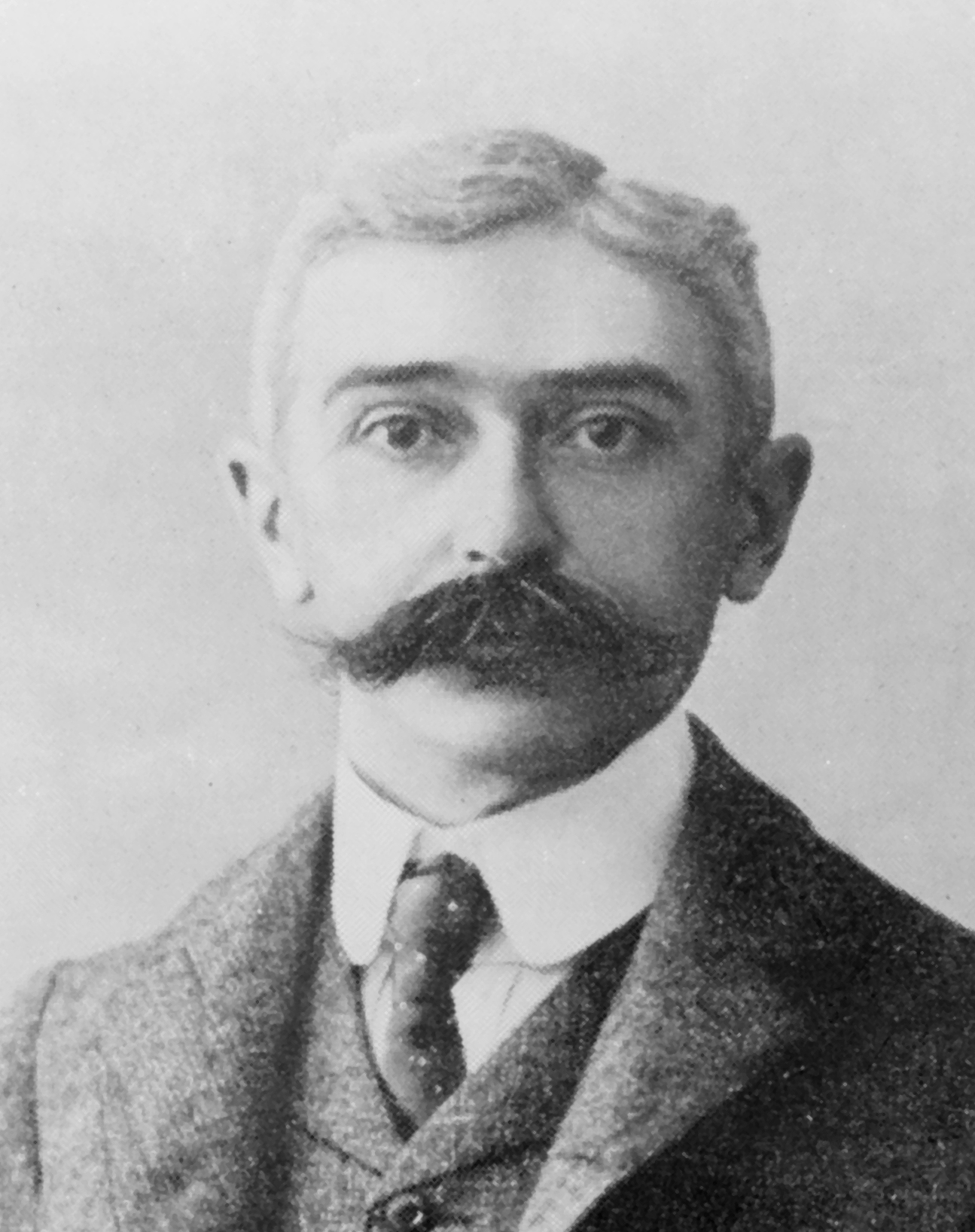
Baron Pierre de Coubertin.

French educationist Baron Pierre de Coubertin (1863-1937) is credited with the revival of the Modern Olympic Games. He thought that at least one reason for the flowering of Greece during it's "Golden Age" was sport and the ideals behind the Olympic Games.

He wanted to bring the youth of the world together in friendly competition where differences of status, religion, politics and race could be forgotten.

"The most important thing in the Olympic Games is not to win but to take part. Just as the most important thing in life is not the triumph but the struggle. The essential thing is not to have conquered but to have fought well."
—Baron Pierre de Coubertin, 1908. These words now appear on the scoreboard at every Opening Ceremony.

It is a clear that not all differences were to be ignored by him: he followed the Ancient Greek example of male only competition. Much to his chagrin, two women's swimming events were introduced in 1912 and, gradually ever since, women's events have continued to increase in number.

Between 1892 and 1894 he sought support for the modern Olympic Games from both within France and throughout the world. He convened the Congress Internationale Athletique de Paris (Paris International Athletic Congress) which decided on 16th June 1894 to "revive the Olympic Games on principles and in the conditions to the requirements of modern life". 

"The Olympic Games are not merely world championships, but the celebration of impassioned effort, of multiple ambitions and of every form of youth activities as each generation appears at the threshold of life."
—Baron Pierre de Coubertin

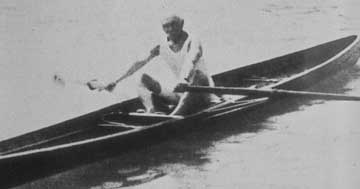
Baron de Coubertin was a keen sculler who rowed well into his later life. He was a member of Societe d'Encouragement du Sport Nautique, the oldest rowing club on the Marne River in France. 

He described rowing as the most beautiful of sports. The Baron thought so much of the sport that he sought to include sculling as one of the disciplines in the modern pentathlon in place of shooting. It was only the question of the additional administrative burden imposed on Olympic officials that dissuaded him.

Baron Pierre de Coubertin sculling on Lac Leman
Picture from 'The Story of World Rowing' — Christopher Dodd 1992

Speaking for ourselves, we see clearly as the Baron Pierre de Coubertin promoted our sport and all others by the Olympic Games. An example for everyone, who fought in favor of an egalitarian sport.

by Guerin-Foster in History of Australian Rowing.

Monday, 4 May 2015

Rowing Biomechanics Newsletter - 4

Dear readers, we apologize for these days break in our blog, but we're back here!

Today, we continue with Biomechanichs Rowing publications Newsletter, and we leave with the last of this series of articles.

Hopefully you like it, will continue to give us the maximum for you.


Again, thank you very much for Rowing Biomechanichal Newsletter.

Thursday, 30 April 2015

Rowing Biomechanics Newsletter - 3

Today, as we have been doing these days ago, we got the third issue of Rowing Biomechanics Newsletter of Australia. Great analysis of the biomechanics of rowing.
We want to remain useful for all of you. Let rowers. We continue!

2011 rowbiomnews03 from izar23sv

By: Rowing Biomechanics Newsletter

Wednesday, 29 April 2015

Rowing Biomechanics Newsletter - 2

Hello again! 

As we said, today we got a new number in the series of articles on the biomechanics of rowing Australia. Hopefully that are of interest to you and may be able to learn as much as we do.

Thanks again!


By: Rowing Biomechanics Newsletter

Tuesday, 28 April 2015

Rowing Biomechanics Newsletter - 1

Hello friends!
We want to share with you a series of articles on Australian rowing biomechanics, we think we can be very interesting, and where we have learned a lot. During this week we will upload various issues.

Thanks for being there! And thanks to Rowing Biomechanics Newsletter for his article!


Monday, 27 April 2015

Rowing Crew exercises for the Beginner

Once the athletes are on the water it’s a good idea when their initially learning to have an experienced athlete in the bow that can just sit there and balance the boat. This same applies to a quad. Sitting tall with a straight back. Then practice what we call taps. This is tapping like this in order to get the concept of the forearm pushing the oar down. You will note that it’s not the shoulders pushing the oar. It’s simply the oar pushing the forearm pushing the oar down. Then this moving to the next stage where we’d have the tap and the separation. Again the forearm tapping and then the arm straight, but without the shoulders moving forward. 

The next sequence is where we go to the body over. We rock over like that rocking over from the pelvis. We go back to the finish again. Taps, body over position. So the sequence being to straighten the arms first and then rock over to the body. 

The next stage is to come down the slide. Holding that same body position all the way into the catch and then squaring up just before they get to the catch and taking the catch and then here we’re demonstrating taps of the catch. Again, put the blade in and it’s put in with the arms only and not by lifting the shoulders. 


Thanks to decentrowing.com

Saturday, 25 April 2015

Basic Rowing Technique

Dear rowers! 

Today, we continue with our publications. The following Power Point talks about the basic technique in rowing. 

In our team, we hope you enjoy and you may continue learning something new every day.

Wednesday, 22 April 2015

General Training Tips

Hello friends! Today we want provided some general tips when training in rowing. Gradually, we continue to grow. Thank you all.

Here are the tips, with the help of concept2.com:
  • Do some light stretching before you row. Include the lower back, back of leg, and shoulders.
  • At the beginning of every workout, warm up by rowing easily for about five minutes, gradually introducing bursts of higher intensity.
  • Plan your workout in advance so you can just get on the rower and start rowing.
  • Variety in your workouts helps both physiologically and psychologically.
  • Be sure to cool down at the end of your workout by rowing easily for five minutes or so.
  • Train with a friend at least some of the time.
  • Don’t forget to take rest days.

Tuesday, 21 April 2015

Rowing Workouts

We continue rowers! In the following article, we leave a rowing workouts, which can be very useful for your own use.

Why row?

Hello dear readers! Maybe some time you can ask, why rowing indoor? Well today we give you a few reasons why it's worth.Sure after reading them you put more eager! Be happy out there. Happy day!

WHY ROW? 

• Rowing exercises all of your major muscle groups: legs, arms, back, abdomen, and buttocks.

• Rowing exercises muscles through a wider range of motion than most other exer- cises. This means that your muscles stretch and your joints move to a greater extent, thereby promoting flexibility and mobility. 


• Rowing provides aerobic and anaerobic conditioning as well as strength conditioning. 

• Rowing is a great calorie burner. Recent research shows that rowing burns calories faster than biking at the same perceived level of exertion. 

• Rowing is a lifelong sport that can be performed and enjoyed by all ages. 

• Rowing is a smooth motion, rhythmic, and impact free. 

• Rowing offers diverse opportunities: inside, outside, on water, on land, competi- tively, or for self-satisfaction. 

• Rowing is a time-efficient workout. It doesn’t take long to get a great workout. 

• Rowing is a complete exercise. 

• Rowing does not discriminate against age or gender. 


On an individual level, rowing may offer these additional benefits.


• To reduce stress and anxiety. 

• To keep in shape for surfing, mountain climbing, swimming, running, cycling. 

• Promotes well-being and self-esteem. 

• Weight loss, blood pressure reduction. 

• For relaxation and meditation, to clear one’s mind, to help one sleep. 

• For exercise when injured, rehabilitation. 

• To warm up for running or weight lifting. 

• A chance to watch TV without guilt. 

• The movement is inherently satisfying. 

• For the challenge of improving, competing against oneself. 

• For camaraderie, to meet nice people. 

• For the FUN of it!

Monday, 20 April 2015

USRowing: Safety Information

We leave a PowerPoint presentation on the US Rowing that sure you can like and to be interested. Let rowers!

Thursday, 9 April 2015

6 Rowing Machine Mistakes You Might Be Making (And How to Fix Them)

It's easy to make mistakes when using a rower, officially known as an "ergometer," the first couple of times. "Learning to row has often been made way too complicated and intimidating," says Josh Crosby, rowing world champion.

Use these expert tips:

  • Mistake 1: Forgetting to check the damper setting.
  • Mistake 2: Rowing with only your arms. 
  • Mistake 3: Mixing up the order of operations. 
  • Mistake 4: Hunching your back during the stroke. 
  • Mistake 5: Banging your butt into your heels or rushing. 
  • Mistake 6: Shooting your butt out and having to jerk your upper body back.
(Huffpost, 2015)


Tuesday, 31 March 2015

Sunday, 29 March 2015

Saturday, 28 March 2015

Planning in Rowing: Trainera

A very important in every aspect and every sport is planning for it. Here is an article in which we see properly plan a season of any discipline we leave.

Hope you like it! Come on!

This article is written in spanish, sorry.


By: 

Pierna, J. J. B. (2001). La planificación en el remo: trainera. Deporte y actividad física para todos, (2), 103-110.